Why I Paint From Imagination, A Short Essay
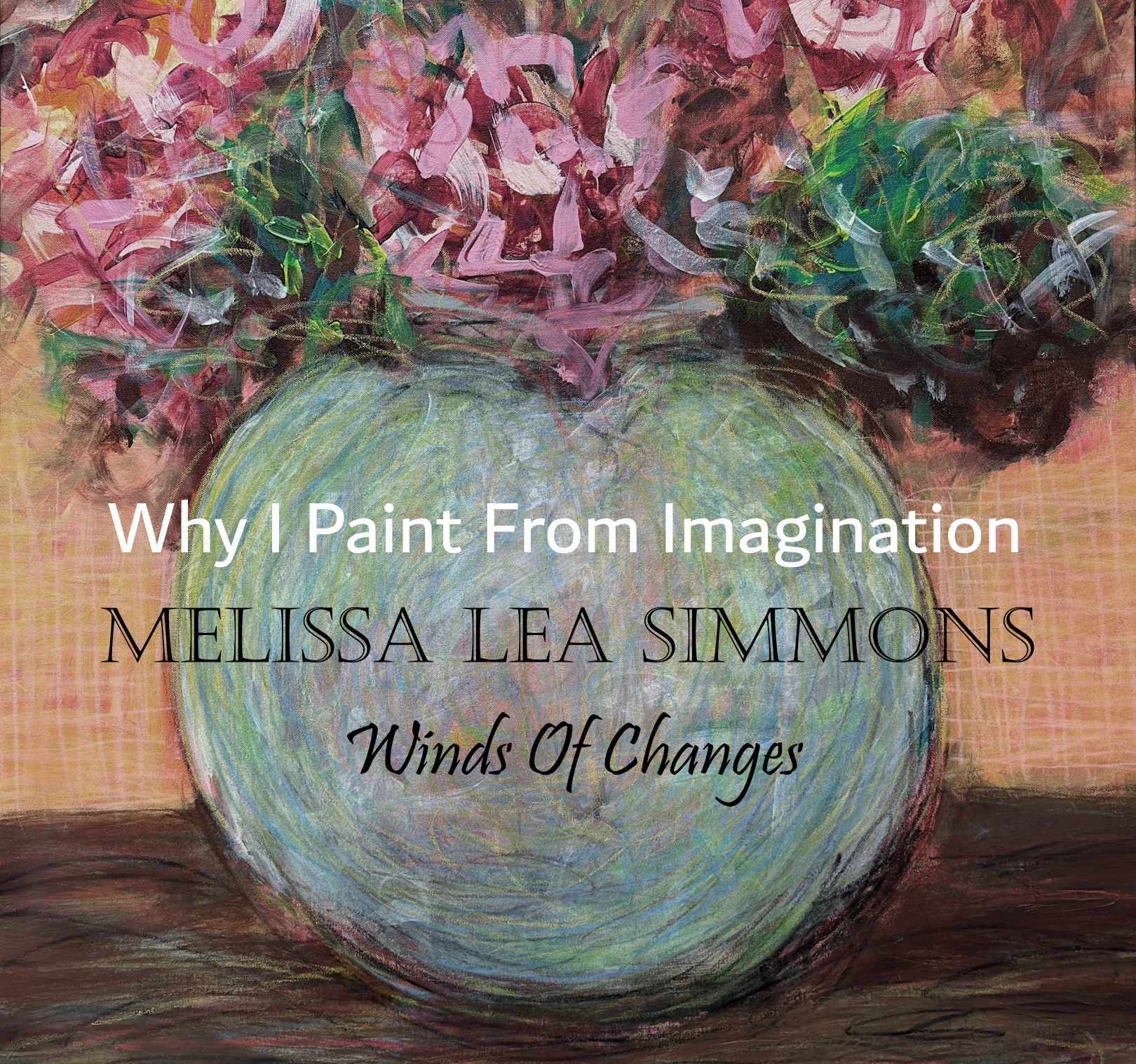
An artist’s short essay on authenticity, intuition, and trust
What Does Authenticity Mean to an Artist?
At a recent artist peer group meeting, our topic was authenticity.
Almost immediately, it became clear that the word meant something different to each of us.
For one artist, authenticity meant accuracy and respect for realism. If you are carving a particular bird, for example, its dimensions and proportions should be true to the bird as it exists in nature.
Another artist described authenticity as bringing current emotions onto the canvas. Another felt that authenticity was too personal and too deep to talk about simply within a group of acquaintances.
Someone else understood authenticity through originality and authorship ~ that you should not copy or trace another artist’s work, and that your source should come from your own photograph or personal experience rather than reproducing someone else’s work.
I thought they were all correct.
Even the dictionary allows for these different understandings. Authentic can mean based on fact, conforming to an original, real rather than imitation, or true to one’s own personality, spirit, or character.
What interested me most was not deciding which definition was the right one.
I began thinking that something of the artist may simply be inevitable.
Whether we are concerned with precise proportions, painting directly from emotion, working from photographs, copying what we see, or deliberately keeping certain emotions outside the studio because painting is a place of peace, we are still making choices.
And our choices reveal us.


different subjects, but each formed through the same practice of intuition, observation, response, and trust.
Painting From Imagination Is My Method
I am an intuitive painter who paints from imagination, and I generally avoid painting from a reference.
That is not my definition of authenticity.
Painting from imagination does not make my work more authentic than work made from observation, photographs, models, measurements, or any other source. It’s simply my method.
And the longer I paint, the more I understand that it is a method I want to protect.
The subject can change. I can paint a figure, a landscape, a bouquet, an interior, or something entirely nonrepresentational. I can work large or small, warm or cool.
My artist language is not any one of those things.
It is in the choices I make.
It is in my marks, my color relationships, the way I use color temperature, the way I build light, what I cover and what I allow to remain, how I balance transparency with opacity, and how I respond to what is happening on the surface.
I don’t need to make every painting look the same in order for it to sound like my voice.
I trust that because I am the one making the choices, something of me will be there, authentically.
The Painting Begins With Intuition

When I begin a painting, I’m not trying to reproduce an image, whether one in my head or one I am looking at.
My paintings begin with intuition.
A color. A mark. A movement. One decision produces another.
Eventually something begins to emerge.
That is when observation becomes essential.
The painting doesn’t arise through observation. It arises from intuition, but it is formed by observation and how I choose to respond.
I look at what has happened and respond.
A color might become too dominant. A shape might need to disappear. Something almost accidental becomes important. A cool color beside a warmer one changes the light. An opaque passage alters what happens beneath a transparent one.
I observe, make another decision, and look again.
The painting continues to form through that exchange.
Protecting What I Don’t Know
This way of working is also part of why I am selective about the classes and workshops I attend.
I want to learn. I care deeply about painting, materials, color, composition, and the work of other artists.
But there is something else I want to preserve.
It is important to me that my innocence stay naive.
There are things I would rather discover by painting. There are mistakes I want to make for myself and solutions I want to find without already knowing the answer.
For me, instruction is valuable when it strengthens my ability to see and make decisions without replacing the instinct that brought me to painting in the first place.
Painting from imagination helps me protect that space.
Painting From Imagination as a Practice of Trust
This is where painting from imagination becomes more than a method for me.
It becomes a practice of trust.
I begin without knowing where I am going ~ I trust an impulse enough to act on it. Then I observe. And then I respond.
Sometimes I follow what appeared, and sometimes I change direction completely.
That way of working is closely connected to my faith.
My art practice supports the way I live, and the way I live supports my art practice. Each strengthens the other.
Both ask me to practice trust and to believe good things are here and good things are coming.
Faith doesn’t give me a finished picture of what comes next. Neither does painting.
Both ask me to move without complete certainty, to pay attention, to respond to what is in front of me, and to accept that understanding does not always have to arrive before action.
Perhaps that is why painting from imagination has become so important to me.
It leaves room for something better than I could have planned on my own.
I want to keep that door open.

